Difficult to inspect
The path from input to answer is not available for examination, so the people accountable for a decision cannot see how it was reached.
Infrastructure beneath the world.
BlackGrid Labs is a Canadian research and technology laboratory developing computational intelligence infrastructure for complex institutions and systems.

BlackGrid Labs is a Canadian research and technology laboratory developing computational intelligence infrastructure for complex institutions and systems. Sitting under the Veydros Group. The lab exists for one class of work: systemic problems at infrastructure scale, solved with systems whose every conclusion can be traced, re-run, and audited.
The lab is the whole apparatus behind that: the research, the architectures, the models, the governance systems and the application ecosystem intended to form an intelligence layer beneath increasingly complex institutional systems.
Nothing leaves this lab as a public product; what leaves it, leaves under agreement with an institution. The research index runs from the national grid to the limits of statistical language systems — some of it we publish, some of it stays sealed.
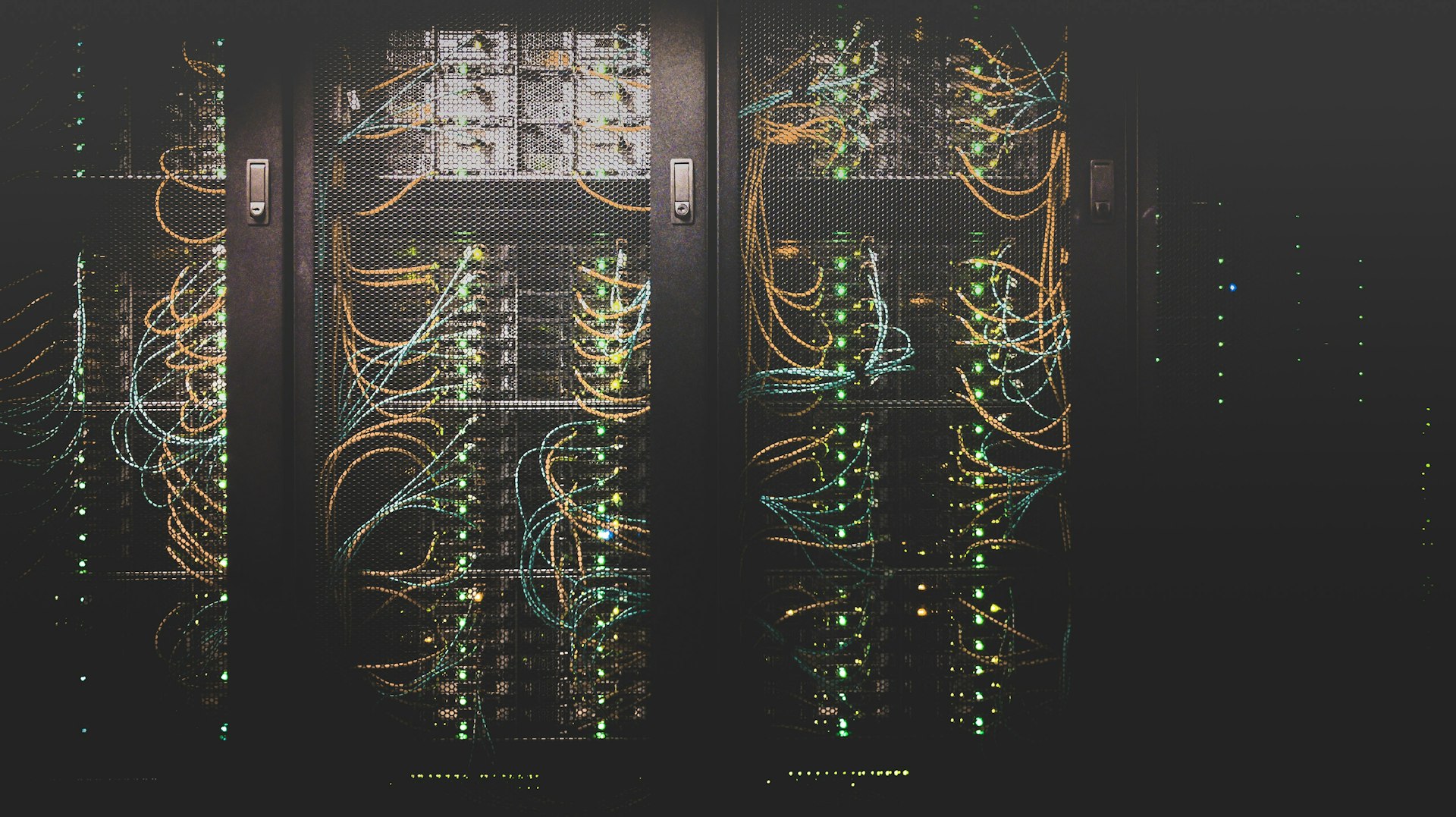
Many of today’s most capable generative systems remain difficult to inspect, expensive to operate at scale, probabilistic by design, and detached from the operating systems their recommendations affect.
The path from input to answer is not available for examination, so the people accountable for a decision cannot see how it was reached.
The same question, asked twice, does not reliably return the same answer. If a result cannot be reproduced, auditing how and why it changed becomes substantially harder.
Capability is bought with computation. Cost scales with use, and a great deal of the work gets repeated where it could have been reused.
The output is a likely answer, and its confidence is asserted where it should have been accounted for.
Analysis arrives beside the system it describes instead of inside it, and the last step — the decision — is left to be taken somewhere else.
We believe intelligence can be deeper, more structured, more efficient, and more accountable.
BlackGrid Labs exists to close that distance at the architecture, not at the interface: reasoning systems whose structure can be inspected, whose results can be re-run, and whose output is an operating decision rather than a paragraph. It is not a dismissal of what modern systems do well. It is a statement about what a system has to be before an institution can rest a consequence on it.
We do not optimize existing systems. We rethink the foundations they were built on, then build better ones.
A problem arrives already carrying the shape of whatever tried to solve it last. The first work is to take that shape off: to establish what is actually being decided, what the evidence can and cannot support, and which of the inherited assumptions were engineering constraints wearing the clothes of facts. Most of what a lab gets wrong, it gets wrong here.
Then it gets built as infrastructure, which is a harder specification than a product: it has to hold at institutional weight, under real operating conditions, for longer than the interest of the people who commissioned it. That standard decides the architecture. Every system that leaves this lab is rooted deeply in one domain.
And it ships with its own account of itself. Every output traces to a rule; every decision carries its proof; the operator can re-run the reasoning instead of taking it on faith. Auditability here is architectural. It is the reason the architecture looks the way it does.
Not a claim about watching. A claim about structure.
A decision does not live in a data point. It lives inside a system — entities, relationships, evidence, constraints, dependencies, interactions, consequences, operating conditions, and objectives that compete with one another.
The Grid is how this lab reads that system: as one structure rather than a collection of parts. The same intelligence infrastructure that reasons about a power corridor reasons about the logistics that serve it, the city that depends on it, and the industry that pays for it — because in the world, those were never separate problems.
Eight domains, fifteen dependencies, one structure. “Everything” means structure: what connects to what, what depends on what, and what a change will do three steps from now.
One lab, drawn in section. Models beneath applications; infrastructure beneath both.
The world the grid runs beneath — utilities, operators, agencies, municipalities, industry, and the organizations that answer to them. This layer is the customer, not the company.
 The applications
Windfall builds the applications. It is the application layer, not the underlying engine: it translates model capability into software institutions can put in front of real operational problems.
 The underlying models
OrangePeel builds the models beneath the grid. It develops the model and reasoning architectures used throughout BlackGrid systems, with research spanning deterministic inference, structural intelligence and computational efficiency.
BlackGrid Labs houses the innovation. The research, the architectures, the governance systems and the infrastructure both divisions are built on. Not one model. Not one application. The bed the grid is laid on.
OrangePeel develops the underlying computational intelligence. Windfall turns it into systems institutions operate.
OrangePeel · the model division
OrangePeel develops the model and reasoning architectures beneath BlackGrid systems, with research spanning deterministic inference, structural intelligence and computational efficiency.
It is the layer where foundational computational research becomes working model families — reproducible findings with confidence, traceback, and a full audit on every run. What OrangePeel proves, BlackGrid governs and Windfall deploys.
Windfall · the application division
Windfall turns BlackGrid intelligence into operational systems. It is the application layer — where model capability becomes software an institution can put in front of a real problem, with team access, security policy and audit history under one accountable owner.
Windfall applications map complex systems, identify decision structure, derive high-value actions, and preserve the reasoning behind them.
These are the domains the lab builds toward. Not every domain carries a deployed system; where something is deployed, it is deployed with an institution under agreement, through the client hub.
Four positions — not four projects. One argument, taken from what intelligence should produce down to what an institution should be able to do with it.
We are not trying to make the language better. We are trying to make the intelligence better.
Summarizing what is already written is not understanding. The work is to derive what was never stated: hidden structure, relationships, dependencies, convergence, contradiction, downstream effect.
A system is more than its records. It is what depends on what, what moves together, and what quietly cancels out. We treat those relationships as the object of computation, so what comes out is a clearer picture of the system itself — including the decision paths that were always in the evidence and never visible in it.
One architectural decision, and the properties institutions actually need follow from it.
The lab researches reasoning systems whose conclusions arise from governed, inspectable computational structures rather than uncontrolled probabilistic generation. Traceability, auditability, reproducibility, explicit uncertainty and deterministic execution are not five features. They are consequences of that one architectural decision.
Determinism is not truth. If the evidence is wrong, or the assumptions are wrong, or the rules are wrong, a deterministic system will derive a wrong conclusion — precisely, repeatably, and with a complete account of how it got there. That account is the point. A wrong answer you can inspect is correctable. A wrong answer you cannot inspect is not.
Explainability is the floor of this research, not the objective.
The thesis is that governed structure should also cost less to run. Reasoning represented compactly can be reused instead of re-derived, which takes repeated probabilistic inference and brute-force search out of the path. We are researching architectures intended to increase useful intelligence per unit of computation.
Designed for computational efficiency: compact structural representation, deterministic execution, reusable reasoning, and lower latency where the architecture permits it. We do not publish performance claims that have not been measured outside this lab. When there are numbers worth quoting, they will arrive with the method that produced them.
Intelligence that does not change an operating decision has not finished.
The work ends where an operator acts: a ranked action, an allocation, a scenario evaluated, an intervention selected, a threshold monitored. Understanding that stops short of the operating floor is unfinished work.
This is where Windfall matters. The models derive; Windfall is where an institution operates on what was derived, under its own policy, its own people, and its own audit history. Same reasoning, same trace, carried all the way to the point where someone has to decide.
The whole company in one line — research at one end, an operational decision at the other.
A question the lab takes apart before it tries to solve it.
The model and reasoning architecture that answers it.
Governance, audit, security and scale around the model.
The system an institution can actually operate.
The operator who carries the consequence.
The action — and the reasoning that produced it, preserved.
Built in Canada. Governed in Canada. Answerable to the institutions it serves.
BlackGrid Labs is a Canadian laboratory, based in the Greater Toronto Area. The systems that leave it are engineered, governed, and audited inside Canadian jurisdiction, for institutions that carry real weight.
Sovereignty here is a technical property: an inspectable system can be examined by the people accountable for it, on their own authority, with no black box in the verdict path. Infrastructure this critical should not depend on anyone else’s opaque model, and the domestic capability to build it has to exist somewhere.
Not a market to win. A layer to become.
We believe computational intelligence will increasingly become infrastructure — not an application a person opens, but a layer the rest of a system assumes.
We are not trying to be present in every industry. We are trying to be correct in the layer beneath the ones that carry weight. Infrastructure is judged in decades; we are building accordingly.
Some of that work is published. Some of it stays sealed, and will for a long time. What is public lives in the research index.
Models beneath applications. Intelligence beneath decisions. Infrastructure beneath the world.
The things people actually ask, answered without the marketing layer.
BlackGrid Labs is a Canadian research and technology laboratory developing computational intelligence infrastructure for complex institutions and systems. It is the research and development arm of Axis Meridi Technologies, part of The Veydros Group. BGL is not one model and not one application: it builds the research, architectures, models, governance systems and application ecosystem intended to form an intelligence layer beneath increasingly complex institutional systems.
BlackGrid Labs houses the innovation. OrangePeel develops the underlying computational intelligence — the models and reasoning architectures. Windfall turns that intelligence into applications for real institutional and operational problems. All three are one grid: models beneath applications, infrastructure beneath both.
It means understanding systems structurally rather than as isolated pieces — entities, relationships, evidence, constraints, dependencies, interactions, consequences, operating conditions and competing objectives. It is not a claim about surveillance. Important decisions exist inside systems, not inside individual data points.
Systems whose conclusions arise from governed, inspectable computational structures rather than uncontrolled probabilistic generation. Every output traces to a rule; every decision carries its proof; the same inputs return the same result. It does not mean the conclusion is guaranteed true: if the evidence, assumptions or rules are wrong, a deterministic system will still derive a wrong conclusion — but the error has an address.
Products are not readily available to the public. Access is provisioned, not purchased: capability is disclosed to qualified organizations, and organizations with access operate through Windfall, the client hub.
In the Greater Toronto Area, Ontario, Canada. The systems that leave the lab are engineered, governed, and audited inside Canadian jurisdiction.
The research index at blackgridlabs.com/research carries the public documents — the Helios Grid series, the Atlantic Corridor release, and the Deterministic Intelligence initiative. The newest Helios Grid document is available to accredited press via press@blackgridlabs.com.
Research partnerships: research@blackgridlabs.com · Press: press@blackgridlabs.com · Client access: access@blackgridlabs.com · or the contact form.
Photography: Unsplash.
Two sentences. They have not changed since the lab was founded.
Build computational intelligence that helps institutions understand complex systems, make better decisions, and act with greater precision.
Become the foundational intelligence infrastructure behind the world’s most complex institutions and industries.
Everything means structure. What connects to what, what depends on what, and what a change will do three steps from now. The rest is in the research index.